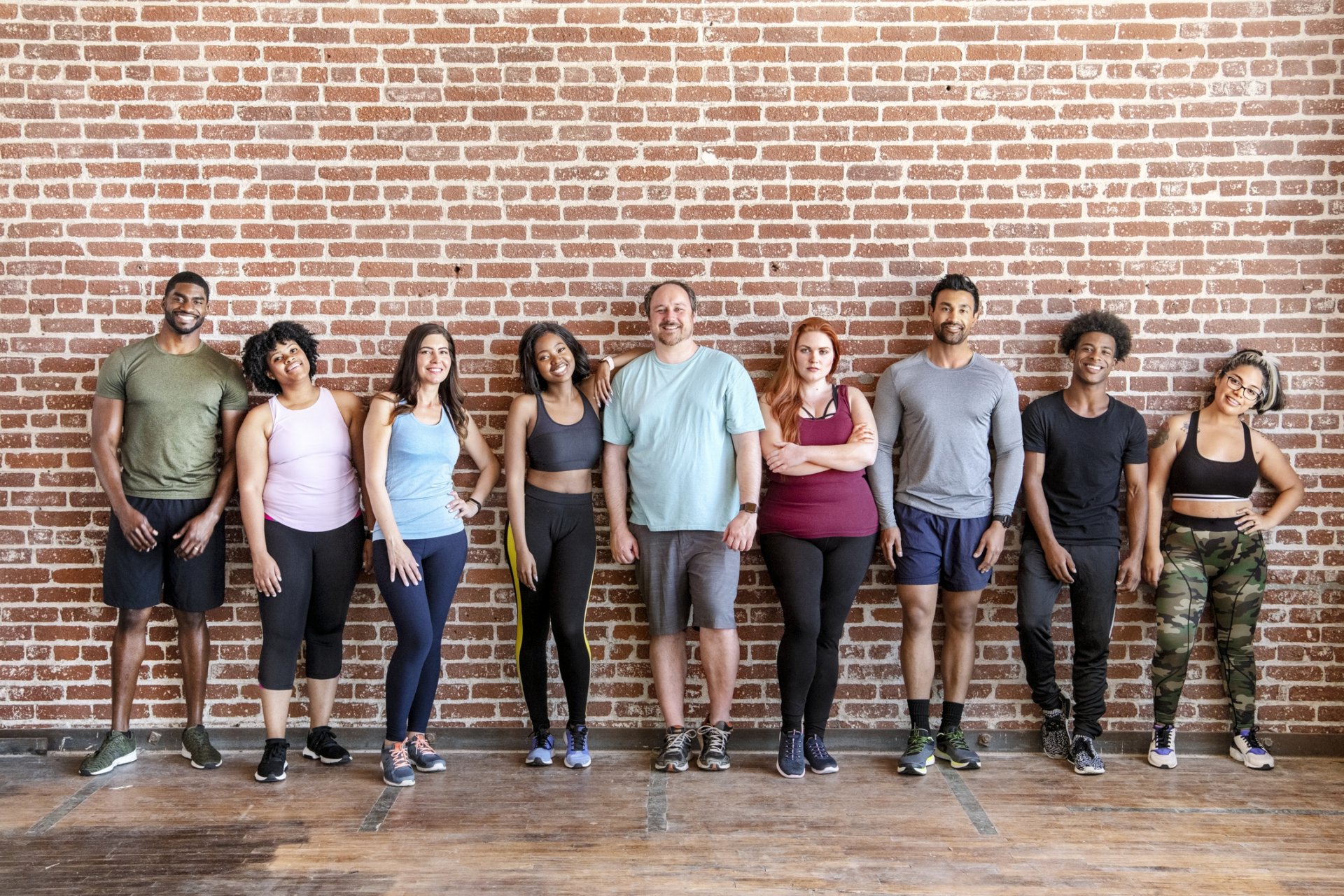

When movement spaces don’t feel made for your body

What a lived-experience survey reveals about inclusive group exercise and lipoedema
This article draws on responses from a lived-experience survey, collated by EMD UK CPD Partner LippyFitness, exploring how people with lipoedema experience movement and group exercise spaces, and what instructors need to know to help them feel more included and understood.
Lipoedema is a chronic, progressive adipose tissue disorder that disproportionately affects women and people assigned female at birth, often involving painful fat accumulation typically in the lower limbs and arms. It is a distinct medical condition – not lifestyle-induced obesity – characterised by capillary fragility (leading to bruising and fluid retention) and connective tissue laxity, which frequently causes joint instability, mobility issues and systemic fatigue.
Importantly, lipoedema is not caused by lifestyle choices, such as “overeating” or being sedentary. People living with lipoedema may be highly active and engaged in regular exercise, yet still experience pain, fluid retention, tissue changes and disproportionate fat accumulation.

For instructors, this serves as an important reminder that bodies are diverse and appearance alone tells us very little about a person’s health, fitness, activity levels or commitment to movement. Many people living with lipoedema are already leading active lives and engaging in regular movement, yet still experience significant symptoms. Understanding this can help instructors move away from assumptions and towards curiosity, compassion and individualised support.
This distinction matters within fitness settings. Participants may arrive carrying years of stigma, having repeatedly been told to simply “eat less and move more”. Instructors who understand the condition can help create an environment where participants feel supported rather than blamed, allowing movement to become a positive and sustainable part of their wellbeing.
Many people living with lipoedema already engage in movement, but struggle to find exercise spaces that feel manageable, adaptable and supportive.
Traditional fitness culture often emphasises motivation, intensity and discipline as the primary routes to progress. However, participants living with lipoedema, chronic pain, fatigue or fluctuating mobility may instead benefit from more adaptable and sustainable approaches to movement.
Survey participants described wanting “gentle appropriate exercise”, “a safe space” and instructors who can help them understand “signs of overdoing it or excessive inflammation”. These responses give instructors an important insight into why some participants may feel apprehensive, inconsistent or hesitant within group exercise settings.
The experiences shared through the survey highlight some of the hidden barriers people may encounter within mainstream movement spaces.
Hidden Barriers
People living with lipoedema often navigate pain, body shame, fatigue and mobility challenges that can change their relationship with exercise. Many traditional fitness environments prioritise intensity, repetition and visible physical progress and this approach can feel difficult for participants managing fluctuating symptoms or joint strain.
Survey respondents commonly reported:
- Knee pain
- Fatigue
- Joint pain
- Balance issues
- Hypermobility
Instructors may interpret reduced participation as lack of motivation, when participants may actually be managing discomfort, uncertainty or fear of overdoing it. Capacity may also vary significantly from week to week, particularly during periods of increased pain, stress or hormonal change. Responders also noted that sometimes showing up in a bigger body is just too hard that day.
For instructors, this highlights the importance of adaptability within group exercise environments. The fluctuating nature of lipoedema may also require us to think about adaptability differently, not just as regressions or progressions, but as creating space for participants to respond to pain, fatigue and energy changes from class to class.
On the studio floor, this may look like offering wider stances during squats and lunges to accommodate tissue distribution and reduce knee stress, providing seated or supported options before participants need them, or normalising movement choices rather than presenting them as regressions.
Some people living with lipoedema may also experience hypermobility, altered gait patterns or postural variations such as genu valgum (knock knees). This can influence how joints are loaded during weight-bearing exercise and highlights the importance of individualised alignment cues rather than assuming one position suits everybody.
A participant managing pain, fatigue or inflammation may benefit from reducing range of motion, slowing tempo or resting before reaching complete exhaustion. Equally, incorporating a calmer cool down and recovery period may benefit the whole class.
Participants with lipoedema often report fluctuating symptoms, and creating opportunities for recovery, regulation and body awareness can help movement feel more sustainable. By presenting these adaptations as normal options for everyone in the room, instructors can reduce stigma and encourage participants to work with their bodies rather than against them. Success may not always look like doing more; sometimes it looks like continuing to participate despite fluctuating symptoms.
What participants are asking for
Lipoedema is thought to affect around 11% of women and people assigned female at birth, making it likely that many group exercise instructors are already supporting participants living with the condition. That said, many women do not know that they have the condition and merely believe that they are “not trying hard enough”.
Often respondents are not looking for extreme fitness solutions or rapid transformation; they are looking for sustainable ways to remain connected to movement. Responses repeatedly focused on safety, community, confidence and sustainable participation rather than weight loss or performance goals.
Participants asked for:
- Community
- Motivation
- A safe space
- Sustainable exercise
- Better mobility
- Reduced pain
Respondents also already enjoyed activities such as walking, swimming, dancing and yoga. In many cases, the desire to move is already there. This suggests the barrier is often not unwillingness to move, but finding settings where movement feels achievable and supportive.
This is where group exercise instructors can have a significant impact. The tone, language and adaptability of a class can significantly influence whether participants feel confident returning. For some participants, feeling understood within a group setting may be the factor that helps movement become consistent and sustainable again.
Instructor Impact
Small changes in teaching approach can make group exercise spaces feel significantly more accessible and sustainable for participants living with lipoedema. Inclusive practice does not necessarily require specialist programmes. Often, pacing, language and adaptable options can make participation feel more achievable and sustainable.
This may include:
- Offering seated or lower-impact adaptations
- Encouraging rest without judgement
- Avoiding punishment-based language
- Celebrating consistency rather than intensity
- Fostering social connection within classes
- Reducing emphasis on weight-loss focused messaging
For example, instructors may choose to shift language away from weight loss, calorie burning or “earning” food and instead focus on functional outcomes such as improving balance, climbing stairs more comfortably, carrying shopping, playing with children or maintaining independence.
Pre-class conversations can also be valuable. Asking whether participants are experiencing increased pain, inflammation, fluid retention, hypermobility-related instability or fatigue can help guide exercise choices on that particular day.
Perhaps most importantly, instructors can help participants recognise that rest is a valid movement strategy. Encouraging recovery before complete fatigue sets in may help participants avoid symptom flare-ups and return to movement more consistently over time.
When participants feel understood and able to adapt movement to their bodies, they may feel more confident returning consistently. Across the survey, belonging was cited as an important foundation for long-term movement participation.
Conclusion
For many people living with lipoedema, feeling welcome within movement spaces may be just as important as the exercise itself. Supportive group environments can help participants rebuild confidence, reconnect with movement and return more consistently.
Creating a space where everybody can safely and confidently participate is the hallmark of an exceptional instructor. Lipoedema inclusion is just one aspect of a broader commitment to accessible, high-quality instructing.
Group exercise instructors are often in a powerful position to create spaces where participants feel able to move as they are, rather than waiting until they feel “fit enough” to belong.
Want to Learn More?
If this article has prompted you to reflect on how you support participants living with lipoedema, chronic pain or fluctuating health conditions, Ginette (Nettie) Rough has developed an EMD UK-recognised CPD: Supporting Clients Living with Lipoedema in Group Exercise Settings.
The training explores the condition in greater depth and provides practical, evidence-informed strategies instructors can use immediately to create more inclusive, adaptable and sustainable movement experiences.
Find out more: KinbyNettieCIC – Thrive Kin in Action