How to make movement an improvement for your participants

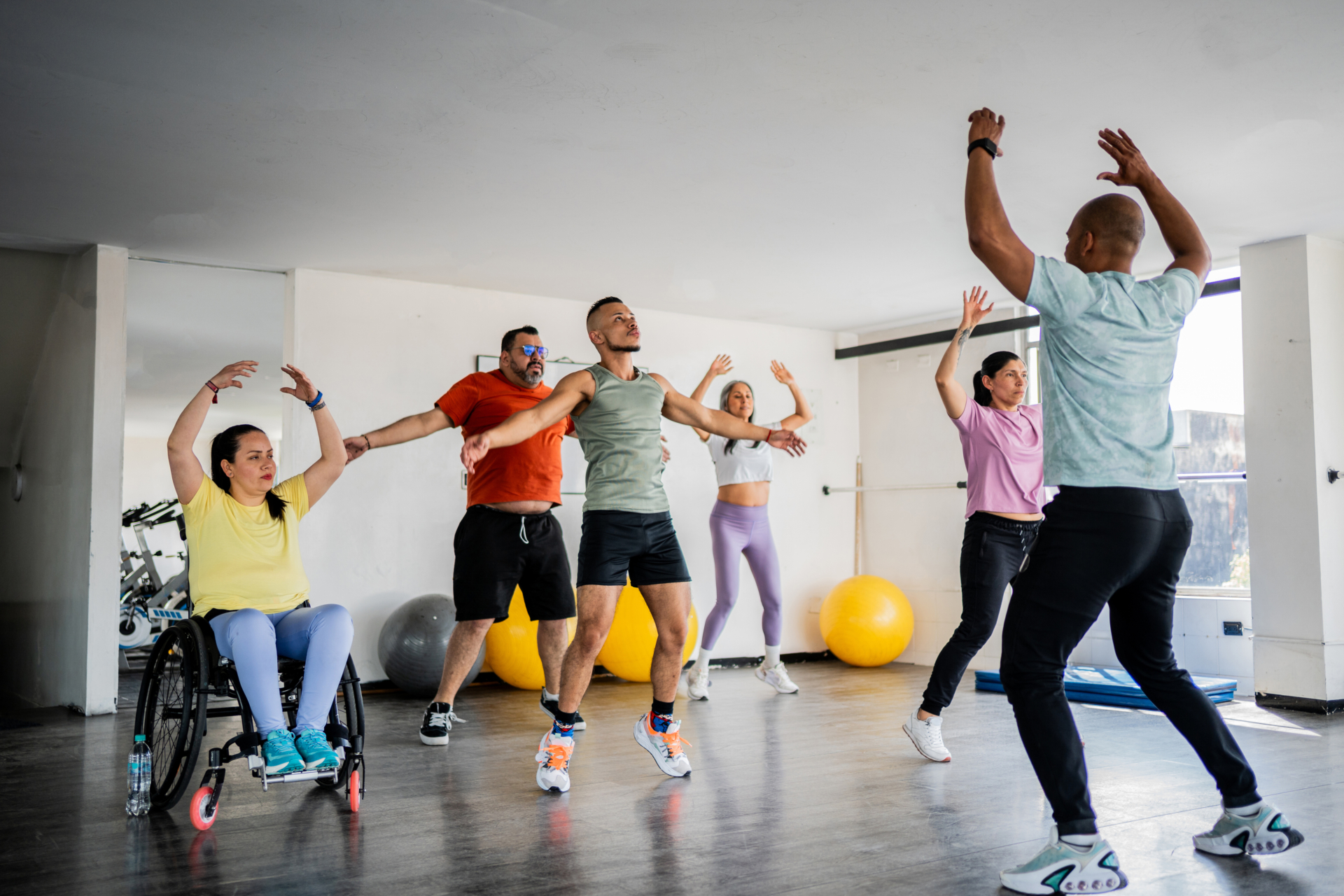
As instructors, we are taught to give alternatives and rightly so. Alternatives help people work around injury, manage pain, stay included and feel safe enough to take part.
But there is a question we perhaps don’t ask often enough: Are we helping with alternatives — or sometimes holding people back?
A chair, a prop, a reduced range or an easier version can be a brilliant tool. But ideally, it should remain a tool, not a label, not an identity and not automatically the place someone stays forever.
Ci Cashmore, the Founder of Purestretch, shares her advice of how to address this situation in your classes.
The risk of constantly reinforcing limitation
If someone is repeatedly told:
“Take the easier option.”
“Stay with the chair.”
“Keep the knee down.”
“Don’t try that one.”
…they can gradually begin to believe that this is simply what their body is capable of.
People can often do far more than they think they can…. but fear is powerful.
If someone has experienced pain, injury, a fall or simply lost confidence in their body, they may become understandably cautious. If we constantly humour that fear by removing every challenge before they even attempt it, we may unintentionally reinforce the belief:
“I can’t.”
Our job is not to dismiss somebody’s fear, but neither is it to feed it. Once a limitation becomes part of someone’s identity, they may begin filtering every movement through it, they stop asking:
“Can I do this?” and automatically assume: “I probably can’t.”
That affects confidence and willingness to try. It can make someone more dependent on support and less trusting of their own body. And if we constantly reinforce their limitation for them, we can accidentally strengthen that story.
So perhaps the better message is:
This is where you are today — not necessarily where you have to stay.
Your client is not their injury. They are not their bad back, their dodgy knee, their balance problem, their age, their fear. Those things may influence how you teach them, but they do not need to define their experience of movement.
We should never ignore genuine pain, medical restrictions or safety concerns, but we should be equally careful not to underestimate people. There is a big difference between protecting somebody and preventing them from progressing.
Give the tool and then explore progression
There will absolutely be times when an alternative is necessary. Give it. Use it. Make the person feel comfortable with it but then keep watching. Does that person still need the same level of support?
- Could two hands on the chair become one?
- Could a very small range become slightly bigger?
- Could they try the next progression for five seconds?
- Could they complete one repetition before returning to their alternative?
Progress doesn’t need to be dramatic.
Tiny wins are still wins.
The important thing is that the alternative becomes something that supports progress, rather than something that quietly prevents it.
What we give attention to matters
There is another side to this that instructors will recognise. Sometimes people can begin to receive a lot of attention around their limitations. Every time they mention a pain, fear or difficulty, the instructor rushes over.
“Oh gosh, are you okay?”
“Let me change that for you.”
“Don’t worry, you don’t have to do that.”
This is nearly always coming from kindness. But human behaviour is heavily influenced by what receives attention. If limitations consistently receive the biggest response, someone can, often completely unconsciously, begin to lean into them. The limitation becomes the moment when they feel noticed, cared for and reassured.
That’s why I think we need to be thoughtful about where we put our attention. Acknowledge genuine limitations calmly, offer the appropriate alternative. Make sure the person is safe. Then move on. But when you see progress …that is when you give them your energy.
“That was stronger.”
“You needed less support then.”
“Look at that range!”
“You did that without even thinking about it.”
“That’s a huge improvement.”
Let progress become the thing that gets noticed. Plus, the language we use as instructors has an enormous effect on attitude. If the whole class is built around problems, warnings and limitations, the atmosphere can become cautious and restricted.
But when the instructor starts noticing effort, improvement and possibility, something changes. People stand taller, they try more, they become less frightened of getting things wrong. They start trusting themselves. And that confidence can spread through the room.
The mental effect of achievement
Think about the last time you achieved something you genuinely didn’t think you could do. That feeling is incredible. You feel exhilarated, proud and more confident! And suddenly the voice saying “I can’t do that” becomes a little quieter.
That feeling matters.
Every time someone safely achieves something they previously thought was impossible, they gain evidence that they are capable. And that can change the conversation in their head.
From: “I can’t do that.” to: “I didn’t think I could do that.” and eventually: “What else can I do?”
That is a huge shift. You are no longer simply strengthening muscles; you are strengthening confidence, resilience and independence. You are inspiring them to trust in their own body and their willingness to try.
So:
- Give the tool.
- Build the confidence.
- Challenge the fear when it’s safe.
- Progress when you can.
- Praise every step forward.
Because ultimately, we are here to strengthen the whole person, body and mind.
And perhaps that’s the simplest way to put it: