
Beyond the Chair: Janet’s Journey from Stroke to Self-Belief Through Dance

How tailored dance-based group exercise classes can help stroke survivors rediscover movement, confidence and connection, and what group exercise instructors can learn from Janet’s story with Dancing For Health’s Stepping Forward dance project.
A life changed in an instant
Seventeen years ago, Janet suffered a devastating stroke. She spent nine months in a coma, and when she emerged, her life had changed dramatically. Everyday movements became challenging, and the effects of her stroke continued to shape her life long after her initial recovery.
For many stroke survivors like Janet, finding suitable exercise classes can be difficult. Traditional group fitness classes may feel inaccessible, particularly when their movement is limited or they have lost confidence.
Janet’s experience with a tailored dance-based group exercise approach – in her case the Stepping Forward project - shows how a different approach can open up new possibilities.
Finding movement, confidence and belonging
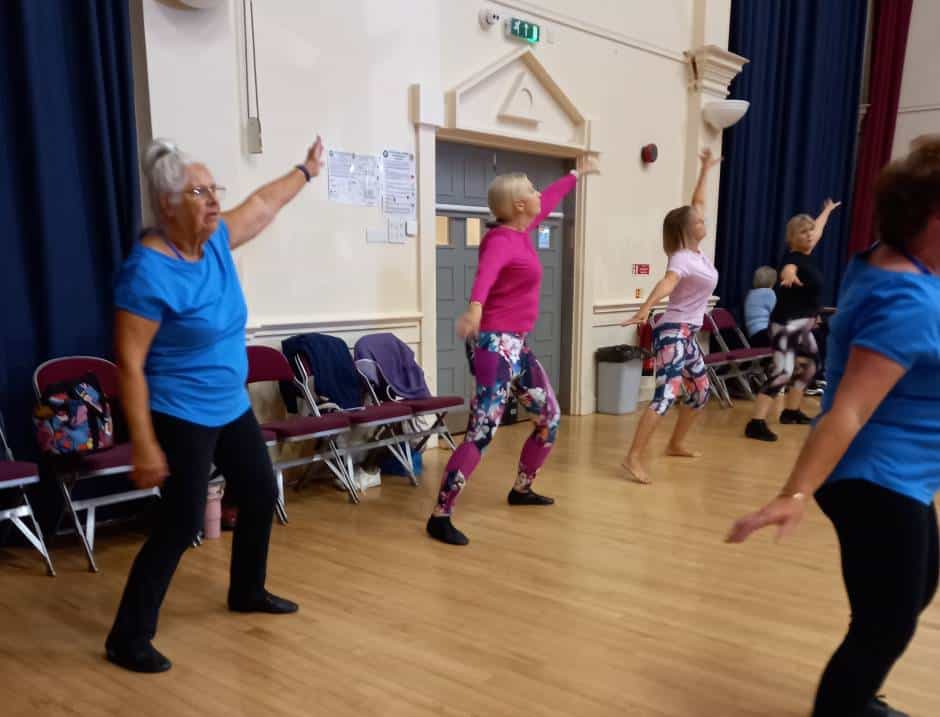
When Janet joined her dance exercise class, she found a community of people who understood her experiences and a space where she could participate without judgement.
Rather than focusing on what Janet could not do, her instructor built a dance specifically around her movement potential, particularly her ability to move her left arm. The routine was set to Gloria Gaynor’s I Will Survive - Janet’s favourite song.
The class learned Janet’s dance together and performed it alongside her. What began as an individual adaptation became a shared experience that built understanding, connection and a true empathy for what Janet has to cope with on a daily basis.
As Janet explains: “I can now do a lot more than I could when I first started.” And speaking about the group, she says:
“It is so uplifting for someone who has had a stroke to be with other stroke survivors and we are really close knit as a group.”
Why dance can make a difference
In many cases, dance is so much more than exercise, especially when it comes to stroke recovery. Through Dancing for Health’s Stepping Forward group, which Janet attended, they’ve seen first-hand how dance can help people affected by stroke rebuild confidence, improve movement and coordination, reconnect with others and, most importantly, rediscover the joy of moving.
What makes dance particularly special for stroke survivors is what happens inside the brain. When we dance to music, we activate multiple areas of the brain at once. Music stimulates the brain’s reward centres, creating feelings of pleasure and motivation, while movement engages the motor, sensory and coordination regions. Different parts of the brain begin communicating and working together in new ways.
Dance enhances neuroplasticity by challenging the brain to learn new movements, form and strengthen neural connections, and continually adapt and multitask through the choreographed sequences, improving memory and cognitive flexibility while physically rewiring the brain in ways that repetitive fitness exercises typically do not.
For someone recovering from a stroke, this ability to build and strengthen connections is particularly important. Dance brings together physical movement, music, memory and social interaction in a way that can make rehabilitation engaging, enjoyable and motivating. Of course, everyone’s recovery is different, but dance can offer another valuable way to support movement, confidence and wellbeing alongside appropriate rehabilitation.
Lessons for group exercise instructors
Janet’s story offers several approaches that can help make group exercise more inclusive, not only for stroke survivors but any participants with limitations or a need for flexible adjustments:
- Start with strengths: identify what a participant can do and build movement around it.
- Offer options without spotlighting differences. Seated, standing and simplified movements can be part of the same routine, so everyone belongs.
- Use music meaningfully. Invite participants to share favourite songs and build activities around music that motivates them.
- Make the group part of the support. Shared routines can foster understanding, connection and a sense of achievement.
- Recognise every kind of progress: Confidence, participation and enjoyment matter just as much as physical milestones.
Making room for possibility
Janet’s story is a powerful reminder that a stroke may change someone’s abilities, but it does not take away their capacity for joy, connection or personal growth.
For instructors, inclusive exercise is not about having all the answers. It is about listening, adapting and creating an environment where every participant has a place.