Last Updated on January 30, 2026 by Laura Jensen
This case study highlights the importance of group exercise for older or elderly adults, especially around areas such as quality of life, falls prevention, isolation and loneliness as well as coronary heart disease, stroke, type 2 diabetes, dementia, back pain, hip fractures, GP visits, mental well-being of participants, and enhanced social capital.
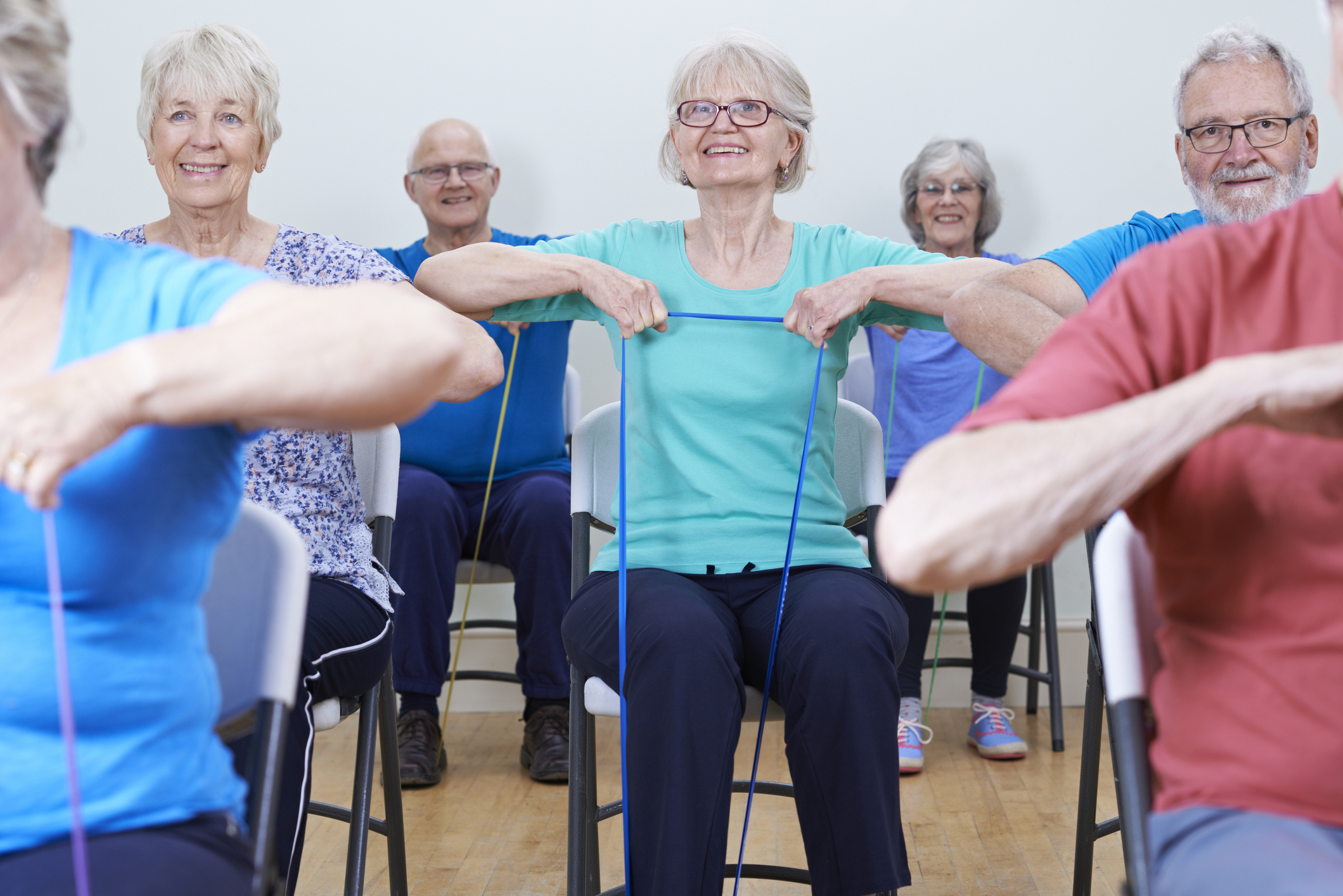
Frankie Leibe is a group exercise instructor with over 30 years’ experience in the industry. She regularly delivers ‘Stay Active’ classes at the Creighton Centre and made possible by their charity, to residents from Fulham and West London. On the day of our visit, her class was attended by 17 elderly individuals. For half of these, group fitness classes are their only form of structured exercise.
One participant, Beryl, joked that if you’re elderly and aren’t exercising as part of a group then you’ll inevitably ‘end up cheating’ on your physical activity.
Group exercise has had a significant impact on the lives of Frankie’s participants. All have multiple comorbidities, and many have suffered/suffer from strokes, heart disease, dementia, type-2 diabetes, hip and back pain.
One of the participants, Maureen, first attended the class a year ago. The lockdowns during the Covid-19 pandemic negatively impacted Maureen’s physical health and mental wellbeing. Her husband passed away prior to the national lockdowns and Maureen felt very isolated and lonely as a result. With the help of her daughter, she started a 38-week ‘Steady and Stable – Falls Prevention’ fitness programme run by Open Age. Unfortunately demand for this free programme outstripped supply and Maureen soon found herself with no accessible outlet to maintain her strength, stability, and exercise regime.
At 92, when talking to her GP about her balance issues (and other ailments) that had started to return following a drop in her activity levels, she was told “well what do you expect at 92?” Not settling for this response, she managed to find Frankie’s ‘Stay Active’ class. When starting the class a year ago she was unable to walk without aid and had severe balance issues and back pain. The class has helped her to regain her balance and stability and reduced her back pain – giving her increased vitality, and improved state of mind and a new lease on life.
Like most of the class, Vicky also suffers with hip and back pain but said “the severity of this pain is reduced following the class and is ‘much worse’ if she doesn’t attend”.
Another of Frankie’s participants, Declan, had a stroke a few years ago and has made phenomenal progress in his recovery, seeing his balance and gait improve through his participation in group exercise.
Khamla has quite a remarkable story. She was referred to Steady and Stable by her GP following her Type 2 Diabetes diagnosis. Khamla spoke of how her life has been transformed since attending a group exercise class. She said:
While a terrific example of how group exercise can improve one’s physical health, group exercise participation makes positive contributions on more than just physical ailments. Khamla said the best thing about the class is socialising with others and this was echoed by Susan who said she was “very grateful” for her classmates and “would be alone otherwise”.
While a terrific example of how group exercise can improve one’s physical health, group exercise participation makes positive contributions on more than just physical ailments. Khamla said the best thing about the class is socialising with others and this was echoed by Susan who said she was “very grateful” for her classmates and “would be alone otherwise”.
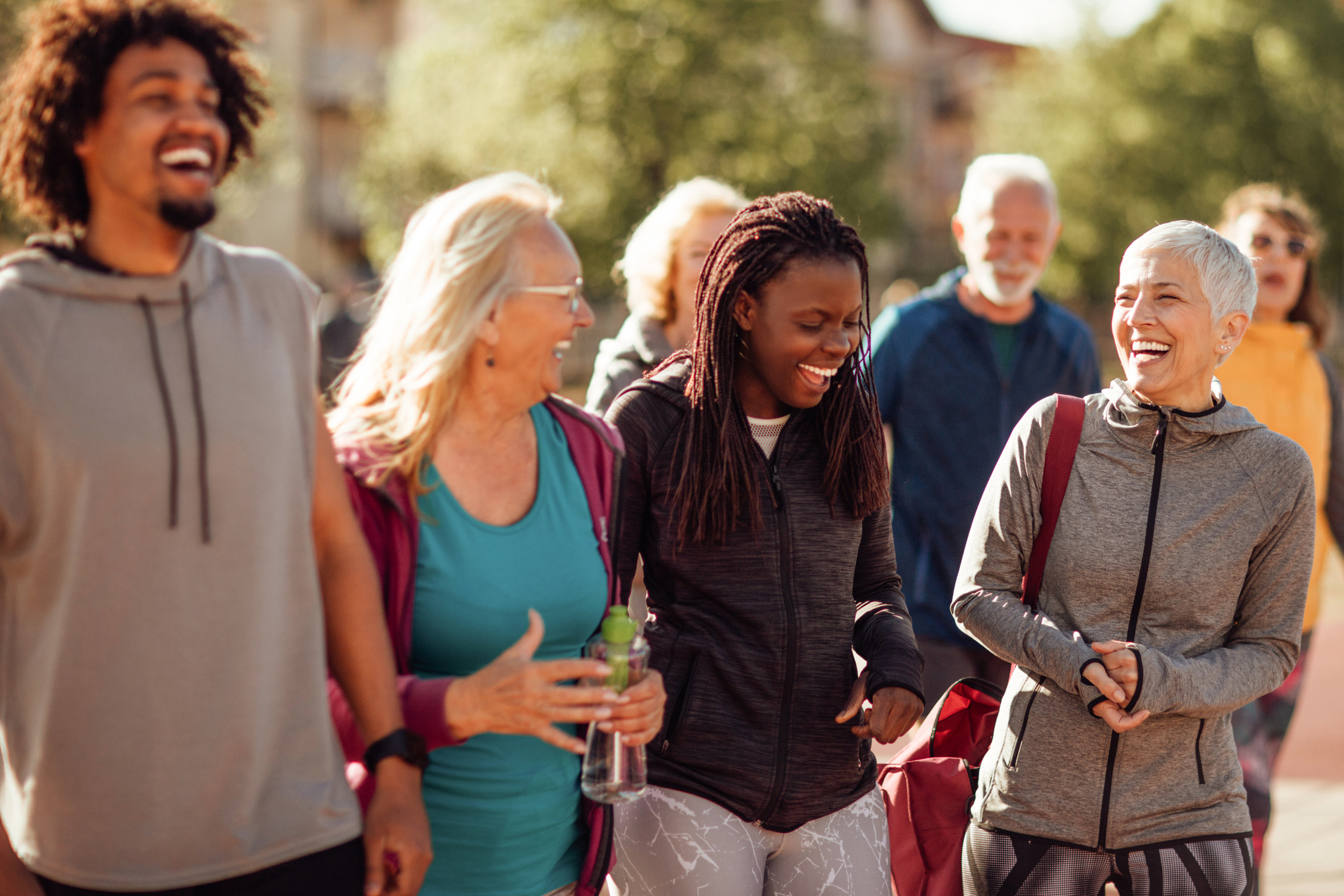
Isolation is a particularly pertinent challenge for elderly people. Group exercise classes can be adapted to all ability (and mobility) levels meaning elderly people living alone can come together to support each other physically, emotionally, and cognitively to achieve a shared goal of improving their overall vitality and quality of life.
On the cognitive front, Nicola said that group exercise helps to stimulate the mind as you have to concentrate and work together to complete the class as one, thus achieving that shared sense of accomplishment. Jean supported Nicola’s statement and emphasised how group exercise helps her to reach full mindfulness and relaxation.
These points were followed up by Beryl who said “there is no fun in doing exercise alone”, which received a “seal of approval” from Nicola who at 83 has been doing group exercise since she was 12 because of the positive impact it has on both her physical and mental health.
Nicola was keen to point out the role that the instructor (in this case Frankie) has on making the environment positive, enjoyable and safe. A number of participants echoed this statement and suggested that if it wasn’t for the approach of their instructor, Frankie, they wouldn’t have considered joining the class as they didn’t initially feel it was for them, or they didn’t feel good/fit enough to take part.
Frankie adapts the class so that a participant can do as much or as little as they deem appropriate, whenever they feel like they can attend. The flexible and adaptive nature of group exercise coupled with Frankie’s empathetic approach is so vital for her participants who suffer from dementia and Parkinson’s as they appreciate the opportunity to attend and participate on their own terms and at their own pace.
Maureen finished the session by saying that those not participating in group exercise as part of their regular activity are “missing out on life by not doing it”.
We finished the session with a spontaneous round of applause for all those that took part and for their beloved instructor Frankie, thus emphasising the community that has been built through group exercise. Following the class, a number of participants left the studio and went for coffee, showing that the friendships made continue beyond the four walls at the Creighton Centre – the small little community centre that Frankie’s Stay Active class calls home.
This is just one of the 10 case studies featured in the EMD UK Social Value of Group Exercise report, exploring the ways in which group exercise can improve the lives of those it supports.
To read the rest of the case studies, and explore the full findings of the report, click the button below.