
Last Updated on March 19, 2026 by Niki
Born with a range of complex health conditions that stole her energy and threatened her life, Pauline found community and strength in the Keep Fit Association.
Pauline is 60 and lives with several severe long-term medical conditions that have affected her since childhood. The conditions, including neuroendocrine cancers and Addison’s disease require ongoing treatment, monitoring and careful management, and at times have been severely debilitating. Pauline’s body doesn’t have any adrenaline, so any stressors can cause her to go into shock, requiring immediate medication.
Yet, Pauline has always been inspired to move.
“I’ve always had an interest in dance,” she explains. “I used to buy the Dancing Times and look through all the pictures.”
As a child she joined classes, but was often unable to attend because of ill health and fatigue. The energy required for school and homework meant dance lessons often felt out of reach. But her interest never disappeared.
“Circumstances can change what we do – but they don’t change who we are. My interest in dance and movement never disappeared, it simply waited.”
Into adulthood, Pauline began looking again for ways to move and reconnect with her body. That search eventually led her to a demonstration event run by the Keep Fit Association, a founding member organisation of EMD UK.
Movement that meets people where they are
From the moment she arrived, Pauline felt different.
“There was no pressure to ‘keep up’, instead I was greeted with professionalism, warmth, inclusion – and above all, community and encouragement to ‘join in’.”
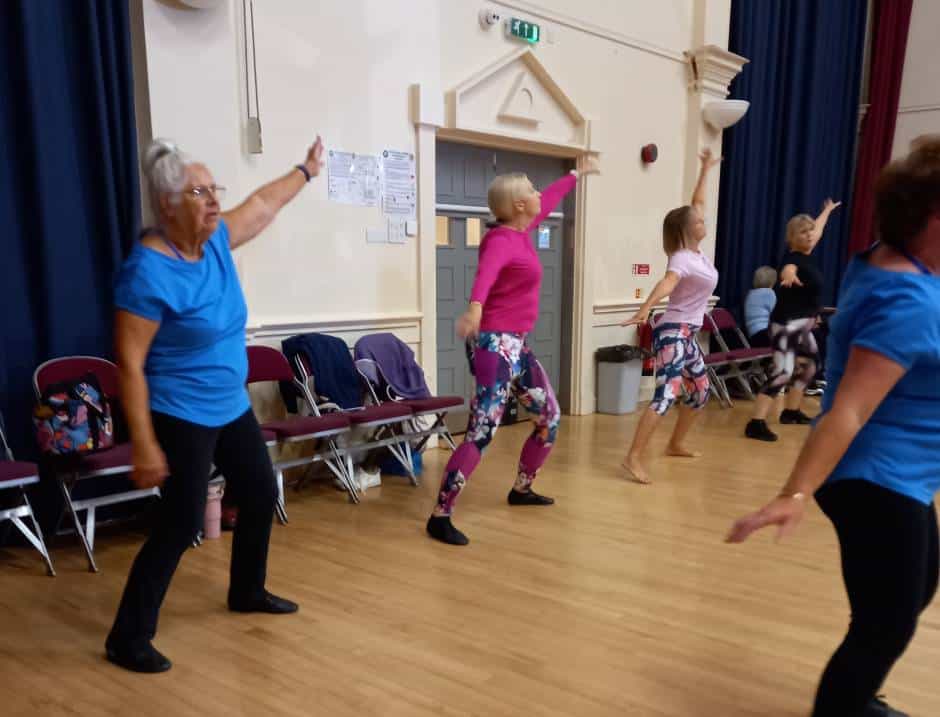
Pauline noticed immediately that the classes were designed with people in mind. Participants were encouraged to move at their own level. Variations were offered and seated options were available. Nobody was expected to keep up with anyone else.
For people managing long-term conditions, that flexibility can mean the difference between feeling excluded and feeling empowered.
Building strength in body and mind
Pauline’s classes were rooted in Rudolph Laban’s Movement Principles – each routine delivered was choreographed to meet a physical objective, and to improve the strength and mobility we all need in everyday life. This kind of dance delivers something different and powerful for people with physical health conditions, building both strength and confidence along the way.
“The fact that I can do something physical is a huge motivator, because if I can go and the more that I can do physically, the better I feel.”
Serious illness brings many challenges that go beyond the physical. Treatments, hospital appointments and long term monitoring can create a constant mental load. Many people struggle simply to find the motivation to move.
Pauline understands this well.
“When you are dealing with a life changing diagnosis it is incredibly hard to find the capacity to motivate yourself to just go for a walk,” she explains.
Group exercise changes that experience. Music lifts the mood. Shared movement encourages participation. The presence of others helps people feel less alone.
“Just walking into a class and being with people moving together is important,” Pauline says.
“Sometimes people know what you’re dealing with. Sometimes they don’t. But you are still part of something.”
Preparing the body for recovery
Pauline’s health challenges are ongoing, but she has seen tremendous benefits from exercise – most clearly when she faced a major operation.
Before surgery, her surgeon spoke about the importance of building fitness to support recovery. Improving strength and endurance would help her pass the pre-operative assessment and cope with the physical demands of surgery, so Pauline was happy to continue attending exercise sessions and maintaining movement wherever possible.
After a nine and a half hour operation, the impact became clear: She was out of bed and taking steps the following day. Compared with a similar operation earlier in her life, she believes her recovery was noticeably stronger, and she attributes that difference to the fitness and mobility developed through group exercise.
‘We are all only human’
For Pauline, dance and the community provided by the KFA has been a lifeline throughout everything – the good times, and the tough times. She praises the work of the instructors she has encountered and the community as a whole and believes that believes group exercise instructors play a vital role in creating welcoming spaces.
Encouragement, empathy and flexibility can help participants feel safe to try movement, even when they are unsure of their abilities.
She also believes it is important for instructors to show their own humanity.
“There’s nobody out there that’s perfect,” she says.
Seeing instructors adapt movements or acknowledge their own limitations, Pauline says, has made classes feel far more inclusive. It shows participants that movement does not have to be perfect to be worthwhile. So she encourages other instructors to do the same.
Start with what you can do
For people living with health conditions, Pauline’s advice is simple:
“Move whatever you can. Even if it’s small…You haven’t got to do it the same as everybody else.”
This message sits at the heart of inclusive group exercise.
Movement can be adapted, progress looks different for everyone, and participation is what matters most.
Sometimes, simply stepping into a room where music is playing and people are moving together can be the first step towards feeling stronger again.

