Last Updated on February 2, 2026 by Laura Jensen
This case study showcases how group exercise can be used to overcome injury and pain which improves quality of life and allows one to return to participating in other sports/activities. It also covers the topics of back pain, sports injuries and the mental wellbeing of participants.

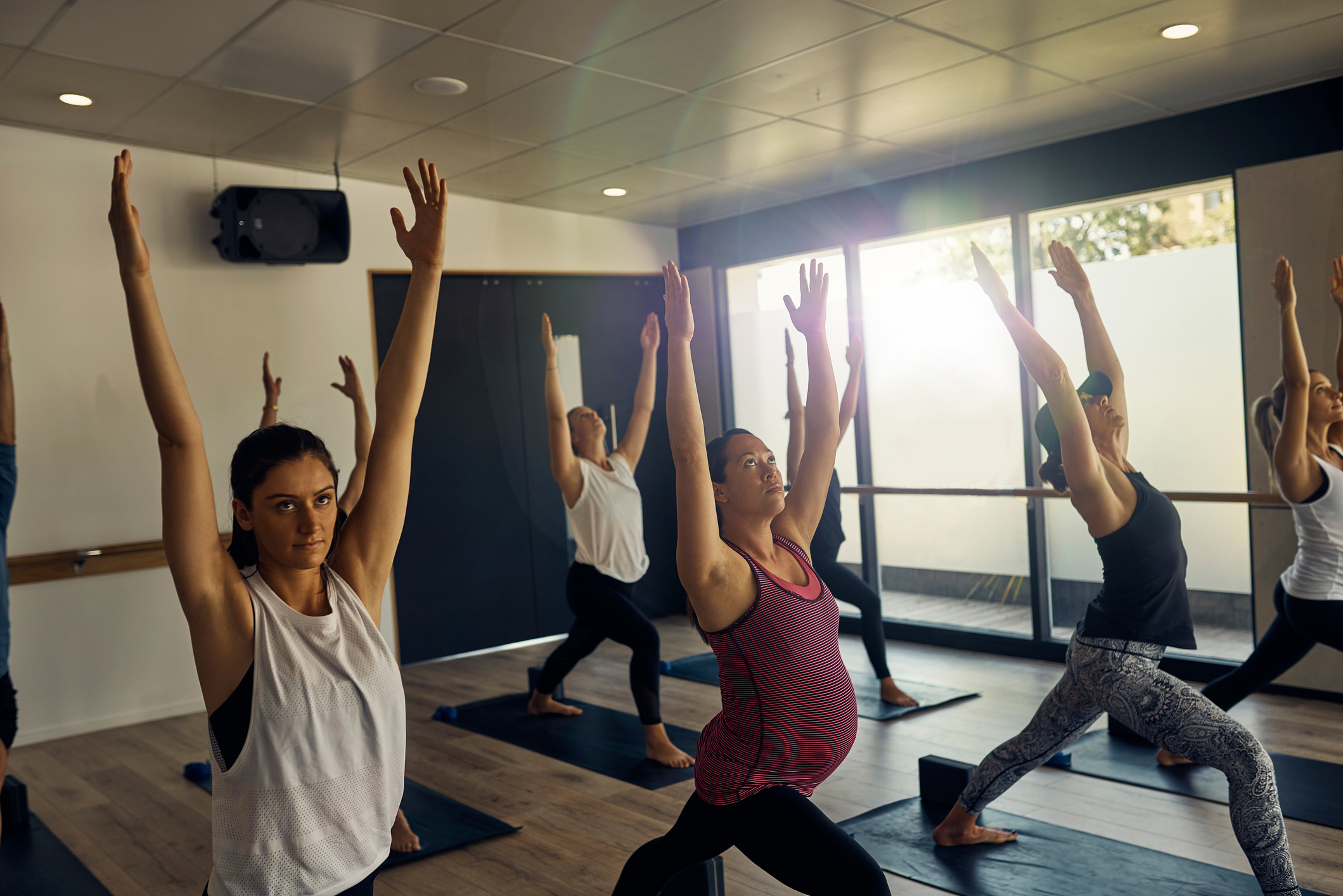
Pam has been an avid group exercise participant for around 8 years. Initially starting with Pilates and more recently MELT to prevent musculoskeletal pain, Pam has been able to return to her primary passion in life, horse riding.
Following an accident whilst out hacking with a friend, Pam found herself to have three prolapsed discs in her spine and a narrowing of the spinal channel which resulted in constant pain and an inability to walk properly at the age of 43. In the 10 years that followed the accident, Pam was “maxed out” on painkillers to manage the symptoms of her injuries. Following a year’s break from horse riding, Pam returned to her favourite hobby but required epidurals around every 18 months or so to manage symptoms and prevent surgery.
The epidurals only worked up to a point. One day Pam thought to herself “I’m 50 but move like I’m 80. I need something to change because I can’t even stand up straight. Through a friend I discovered Pilates”.
Pam started to attend a Pilates class to improve her core strength so that she could ride more safely. She noticed that a weakened core was having a negative impact on her balance and posture which put a strain on her relationship with her horse.
Despite seeing improvements in core strength that enabled her to return to riding, Pam struggled to keep up this form of group exercise post COVID lockdowns because of knee pain caused by her osteoarthritis.
“I was able to ride again but was still in pain. This is when someone told me about MELT. I am staggered by how good my MELT classes have been for me. Not only am I now riding PAIN FREE but I have weaned myself off my meds (following initial success with Pilates), and have overcome my problems with my knee joints, back and hip pain.”
Pam explained how relieved she feels about being introduced to MELT.
Pam spoke about the variety of group exercise opportunities available, insisting that there is something suitable for everyone and it’s just a case of “taking that first step” to find what you enjoy, appreciating the fact that classes can always be tailored to the individual. Pam’s instructors have tailored their classes for her, which has ultimately enabled her to return competition level in British Dressage.
Reflecting on the wider impact of group exercise, Pam said the “ripple effect” is something that has positively surprised her.
Pam finished the interview by explaining why she feels more people don’t consider using group exercise as part of their exercise routine to address physical and mental health issues.
This is just one of the 10 case studies featured in the EMD UK Social Value of Group Exercise report, exploring the ways in which group exercise can improve the lives of those it supports.
To read the rest of the case studies, and explore the full findings of the report, click the button below.